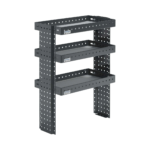
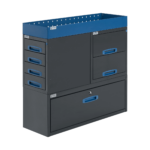
Every hour a commercial vehicle spends parked in an installation bay is an hour it fails to generate revenue. For tradespeople, fleet managers, and independent contractors, configuring a mobile workspace requires a calculated balance between immediate setup speed and long-term utility. The selection of van shelves serves as the foundation of this setup. When equipping a new vehicle or upgrading an existing fleet, the primary decision lies between universal racking configurations and vehicle-specific fitment kits.
This choice dictates not only how quickly the vehicle can return to service but also how securely tools and equipment remain organized under daily operational stress. Selecting the incorrect type of shelving system can lead to unexpected modifications, extended labor costs, and structural integrity issues. Understanding the fundamental differences in installation processes, mounting mechanisms, and vehicle compatibility is essential to making an investment that protects both your tools and your bottom line.
To make an informed choice, you must first understand the structural engineering behind both systems. While both options aim to organize your tools, their design philosophies, manufacturing tolerances, and mounting methodologies differ significantly.
Universal systems are designed to fit a broad range of vehicle makes and models within a specific size class. These shelves are highly adjustable, allowing users to alter shelf heights and compartment widths manually. However, because they are built for general compatibility, they do not align naturally with the specific internal ribbing, wall curvature, or factory mounting points of your vehicle.
Installing universal shelving often requires additional assembly steps, such as measuring the cargo space, fabricating custom brackets, or drilling new holes into the vehicle’s chassis to secure the structure. While they offer flexibility if you plan to move the system to a completely different van model in the future, the initial setup demands a significant investment of labor.
In contrast, vehicle-specific kits are engineered to match the exact dimensions, wheel arch shapes, and structural contours of a particular van model. These kits utilize the manufacturer’s existing pre-drilled holes—often called factory mounting points—located within the cargo area walls.
Because the components are pre-measured and cut to align precisely with these factory coordinates, the need for measuring, drilling, and adjusting is minimized. The shelves contour perfectly to the sloping walls of the van, which maximizes the usable floor space and cargo volume.
Downtime is a direct threat to profitability. When analyzing the total cost of ownership for van shelves, the purchase price is only part of the equation. The time spent assembling and installing the system must be factored in as lost working hours.
The difference in labor required for these two approaches directly impacts how quickly your van can return to the road:
Vehicle-Specific Bolt-On Speed
Kits designed for specific models can typically be installed in a fraction of the time, as they secure directly to factory-allocated points without the need for structural guesswork.
Reduced Labor Allocation
Faster installation means your technicians spend less time in the workshop configuring brackets and more time on-site completing billable service calls.
Minimised Mechanical Risk
Pre-engineered fitments eliminate the risk of drilling into critical vehicle systems, such as wiring looms, fuel lines, or brake systems beneath the floor panels.
While universal racking might appear to have a lower upfront purchase price, the hidden labor costs involved in modifying, leveling, and securely anchoring a generic system often erode those savings. If an installer spends four additional hours fabricating custom brackets and aligning shelves to clear a protruding wheel arch, the labor cost alone can surpass the price difference of a dedicated, pre-engineered kit.
Beyond initial installation speed, the way a shelving system mounts affects its durability. Vehicle-specific systems are anchored directly to the strongest parts of the van’s frame. This direct connection ensures optimal load distribution, allowing the shelves to perform reliably under daily vibrations and heavy payloads without loosening or shifting.
Universal systems, when reliant on adaptive extension brackets, can develop leverage points that fatigue under constant road vibration. Over time, these mounting brackets can bend or loosen, requiring periodic maintenance, tightening, or even re-securing. Ensuring your storage solution is anchored directly to factory positions provides long-term structural reliability and peace of mind on every journey.
Commercial vehicles are designed with unique spatial challenges. Every van model features distinct wall curvatures, wheel arch heights, and structural ribbing positions. When evaluating commercial uk van shelving solutions, maximizing the usable cargo volume remains a priority for ensuring efficient operations.
Because universal shelving units utilize standardized rectangular shapes, they cannot conform to the inward-sloping walls of a typical panel van. To accommodate this shape, installers must mount universal frames further away from the outer walls. This offset creates a significant amount of dead space behind the shelving system. Over several meters of cargo space, this lost gap reduces the center aisle width, limiting your ability to transport larger materials, sheet goods, or heavy appliances on the floor.
Vehicle-specific kits solve this spatial puzzle by utilizing contoured uprights. The steel frames are pre-shaped to mirror the exact angle of your van’s wall studs. By hugging the vehicle chassis tightly, these kits reclaim valuable centimeters of floor space, maintaining a wider central gangway and keeping the vehicle’s center of gravity close to the chassis wall.
Contoured Upright Engineering
Shelving uprights are manufactured to match the slope of your vehicle’s frame, recovering up to 15% of floor width compared to generic rectangular racks.
Wheel Arch Integration
Custom wheel arch cutouts allow the lowest shelf to sit directly over the wheel well, turning an awkward structural obstacle into organized storage.
Even Weight Distribution
Mounting directly to factory locations spreads the payload evenly across the structural frame, preventing local stress points and body panel fatigue.
A professional workspace upgrade must make financial sense. While universal van shelves often present a lower purchase price, analyzing the total installed cost reveals the true financial impact on your trade operations.
When selecting dedicated van tool shelving, you buy a pre-engineered system that removes labor from the equation. An installer or technician can unbox and mount a vehicle-specific kit using basic hand tools in a fraction of the time required to build a universal solution from scratch.
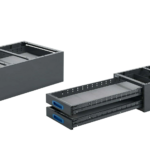
Consider the mechanical specifications of your equipment. Professional drawer systems feature verified limits—such as standard drawers supporting a 100 kg load capacity, and heavy-duty drawer units designed for up to 120 kg of heavy equipment. To support these substantial payloads safely, the mounting brackets must be fastened securely to the vehicle’s high-strength frame elements.
Universal systems require installers to fabricate customized backing plates, drill holes, and construct auxiliary supports to handle heavy tools. These extra steps demand hours of custom metalwork, which increases installation costs and increases the risk of damaging vital fuel lines or wire bundles hidden behind paneling.
To minimize installation downtime and secure a reliable return on your asset investment, evaluate your long-term business goals before finalizing your workspace layout.
For fleet operators who intend to standardize their inventory across a uniform set of vehicles, choosing model-specific kits provides rapid deployment, predictable fleet setups, and verified safety margins. A standardized fleet layout ensures technicians can transition between vehicles without losing productive hours searching for parts or tools.
Conversely, if you operate a highly unusual or legacy vehicle model where pre-engineered kits are unavailable, universal modular units can be adapted to complete the layout. However, when selecting this path, always allocate sufficient installation time and budget for secure, professional fastening to maintain safe operations under demanding daily driving conditions.
Stop wasting billable hours on complicated, customized installations. Our professional, vehicle-specific racking systems are engineered for straightforward fitment, anchoring directly to your van’s existing factory mounting coordinates. Built for durability and demanding trades, our shelving systems protect your tools and streamline your daily operations.