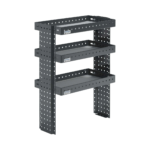
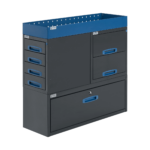
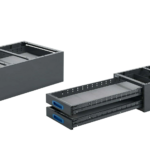
An efficient mobile workspace requires smart organization. For tradespeople operating a Ford Transit, the rear cargo compartment serves as the core of daily operations. Unsecured tools, hardware, and equipment left loose in the back create unnecessary safety hazards and delays. Searching through cluttered piles wastes billable hours and hurts your professional image. Installing a dedicated Ford Transit shelving system solves these issues, organizing the cargo area into an efficient, structured workspace.
Selecting the right racking setup requires evaluating your specific vehicle model, cargo volume, tool weight, and daily workflow. The right system balances payload limits, structural durability, and quick access to daily gear.
The Ford Transit lineup includes multiple body sizes, roof heights, and wheelbases. Shelving designed for a compact Transit Connect or Custom will not fit a full-size Ford Transit. Identify your vehicle’s exact specifications before purchasing any storage components.
Full-size Ford Transit models are classified by lengths—such as the medium wheelbase L2, long wheelbase L3, and the extended L4—and roof heights ranging from the low H1 to the high H3. These dimensions dictate how the shelving system mounts and fits. High-roof configurations support tall, multi-tier shelving to maximize vertical space. Low-roof models require wider, lower-profile racking to maintain clear rear visibility.
Account for the side sliding doors and rear doors. A shelving unit that is too long blocks entry points, restricting quick access to toolboxes or materials from the outside.
Material selection determines your shelving’s durability, safety, and overall lifespan. Most van storage systems use wood, plastic, or steel. Heavy daily use makes the material choice critical.
Steel is the standard for heavy-duty commercial use. Premium shelving systems use 1.5 mm steel to ensure structural rigidity. This thickness prevents panels from bowing or bending under heavy tool loads when driving over rough construction sites or during sudden stops. Robust steel panels also eliminate rattling, keeping the cabin quiet.
Alternative materials have clear limitations:
Steel shelving maximizes your van’s payload and keeps daily operations efficient. A sturdy steel frame protects tools and maintains an organized, professional presentation.
Choosing the right layout is the next step. Fixed racks are welded or bolted into one configuration. Modular racking allows you to reposition shelves, dividers, and drawers as your tools change. For most trades, modular systems are highly practical because they adapt to changing work requirements without requiring a full replacement.
Drawers and open bins serve different needs. Heavy power tools and diagnostic kits belong in enclosed drawers to protect them from dust and impact. Frequently used items like screws and hand tools fit best on open, divided shelves with rubber mats. When configuring modular van shelving systems, check the exact weight capacities to ensure long-term durability.
Match component weight ratings with your typical cargo:
Safe installation is vital. Unsecured tools and weak racks are dangerous. Under sudden braking, loose equipment can breach partition walls. A rigid, bolt-through installation using the vehicle’s factory mounting tracks protects the driver and passenger.
Prioritize shelving that mounts directly to the vehicle’s pre-existing structural tie-down points. This method avoids drilling holes into outer body panels, preventing rust and protecting the van’s resale value. For fitment guidelines tailored to your exact wheelbase and roof height, consult a search-by-car configuration guide.
Proper installation distributes weight evenly across the chassis. Concentrating cargo on one side causes uneven tire wear and degrades handling. Placing heavy items in low drawers and lighter gear on upper shelves keeps the center of gravity low, improving stability during cornering and bad weather.
Ready to organize your cargo space? At Vanshelves.com, we manufacture heavy-duty, modular storage systems engineered for commercial vehicles. Built from durable 1.5 mm steel and backed by a 10-year warranty, our racking is designed to withstand daily professional use.
The right Ford Transit shelving directly improves daily efficiency, safety, and operating costs. Choosing steel and modular components creates a workspace tailored to your trade. An organized van saves billable hours, prevents tool damage, and presents a professional image to clients on every job site.
Why is steel the best material for Ford Transit shelving?
Steel, specifically with a 1.5 mm thickness, provides the structural rigidity needed to handle heavy tool loads without bowing or bending. Unlike plywood, it does not absorb moisture or warp, and unlike plastic, it does not become brittle in freezing temperatures.
How do I ensure shelving fits my specific Ford Transit model?
You must match the shelving to your van’s wheelbase (L2, L3, or L4) and roof height (H1, H2, or H3). Correct fitment ensures the system aligns with factory tie-down points, clears the wheel arches, and does not block the side or rear doors.
What is the advantage of a modular shelving system?
Modular racking allows you to reposition shelves, drawers, and dividers as your equipment needs change. This adaptability makes it more practical than fixed systems for most trades, as it can be reconfigured without requiring a full replacement.
What are the weight capacities for the storage drawers?
Standard tool drawers are designed for a 40 kg load capacity. For heavier equipment like copper pipes or gas cylinders, long cargo drawers can support up to a 130 kg load capacity.
How should the shelving be installed for maximum safety?
Shelving should use a rigid, bolt-through installation that connects directly to the vehicle’s pre-existing factory mounting tracks. This secures the cargo during sudden braking and avoids drilling into the outer body panels, which prevents rust.