Operating a mobile workshop requires a strict focus on efficiency and time management. Every minute spent searching for a misplaced tool or climbing into a disorganized cargo area directly reduces billable hours and impacts business profitability. A professional mobile workspace must be planned with the same precision as a stationary factory floor.
Optimizing the layout of your vehicle is not about keeping things neat; it is about establishing a systematic workflow that protects your physical health, secures your equipment, and projects a highly capable image to your clients. Choosing a high-quality, durable shelf for van applications is the first step, but positioning those storage units strategically is what transforms a simple transport vehicle into an optimized, high-yield workspace. Proper placement ensures that high-frequency tools remain within arm’s reach while maintaining the vehicle’s structural balance and overall safety on the road.
Before mounting any storage hardware, you must conduct a thorough spatial assessment of your van’s cargo area. Every vehicle model presents unique physical characteristics, including wheel arch intrusions, side sliding doors, rear door apertures, and internal structural ribbing. An efficient layout utilizes these characteristics to maximize storage volume without blocking critical access pathways.
The cargo area is divided into three primary accessibility zones based on ease of reach:
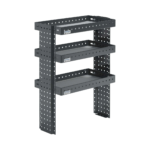
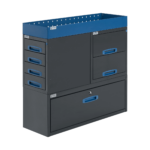
When designing your layout, prioritize placing a modular van tool shelving unit directly opposite the side sliding door or immediately adjacent to the rear doors. This positioning allows you to grab essential hand tools, meters, and fasteners within seconds of arriving at a job site, drastically reducing unnecessary movement and foot traffic in and out of the cargo space.
An unbalanced van is a serious hazard on the road. Improperly distributed cargo severely compromises vehicle handling, increases braking distances, accelerates tire wear, and decreases fuel efficiency. According to leading vehicle transport safety standards, managing the vehicle’s center of gravity is critical to preventing rollover risks during sudden maneuvers.
When arranging your shelving layout, follow these fundamental payload management rules:
For vertical structures, the choice of materials directly impacts safety and payload capacity. Professional-grade racking frames constructed from **1.5 mm steel** offer the rigid structural integrity required to withstand heavy vertical forces and harsh vibration over years of service without buckling.
By placing heavy machinery on the floor level and utilizing upper lightweight compartments for lighter, high-volume items (such as plastic fitting bins or aerosol cans), you maintain a low center of gravity. This mechanical balance ensures the vehicle handles predictably during emergency cornering, keeping you and your mobile assets completely secure.
An optimized workspace layout goes beyond physical safety; it directly influences the biological strain placed on your body during repetitive retrieval tasks. A professional technician accesses tools and components dozens of times per shift. Improper height configuration of heavy-use shelves forces unnecessary bending, stretching, or crawling—actions that lead to chronic fatigue and musculoskeletal strain over time.
Integrating adjustable van shelves allows you to align the height of each storage unit with your physical retrieval path. By placing your most frequently used diagnostic kits and power tools between waist and shoulder height, you eliminate the need to repeatedly stoop or reach high above your natural sightline. This ergonomic alignment speeds up tool retrieval times, allowing you to complete service calls faster and transition to the next billable job without physical exhaustion.
A robust shelving layout is only as reliable as its anchoring points. When configuring a shelf for van operations, the method of mechanical attachment to the vehicle chassis dictates the system’s performance under dynamic loads. Heavy braking, sharp cornering, and road vibrations put intense shear stress on mounting points. If a shelving system is poorly anchored, it will eventually loosen, creating rattling noises and compromising the vehicle’s cabin safety.
To ensure structural integrity and professional safety standards, consider the following mounting and integration practices:
Following strict guidelines for securing van shelving safely ensures that the storage unit remains anchored even in the event of an emergency stop. Professional metal shelving systems are engineered to absorb kinetic forces, protecting the cabin bulkhead and keeping the driver safe from shifting cargo.
The spatial design of your mobile service vehicle directly reflects the professionalism of your trade business. A chaotic cargo space filled with loose tools leads to slow response times, lost components, and unnecessary stress. By systematically categorizing your inventory into accessibility zones and maintaining a low center of gravity, you secure your cargo and establish a repeatable, high-efficiency working routine.
Investing in durable, adjustable cargo structures rather than temporary wooden shelving pays direct dividends in durability and workflow speed. High-quality steel racking systems are built for long-term heavy-duty use, resisting rust and deformation over years of intensive on-site operation. When your van serves as a structured, clean, and safe mobile workshop, you spend less time searching for tools and more time delivering exceptional results to your clients.
Stop wasting billable hours searching for misplaced tools. Transform your vehicle’s cargo area from a daily liability into your most valuable business asset with a premium, professional-grade shelf for van layouts from Vanshelves.com. Engineered for extreme durability and heavy-duty use, our modular systems provide the structural reliability your business needs to operate safely and efficiently every single day.