Commercial vehicles function as mobile workspaces where operational efficiency directly affects profitability. Transporting hundreds of kilograms of specialized tools, spare parts, and heavy equipment introduces a severe, often overlooked hazard: cargo shift. Every turn, sudden stop, or rapid acceleration subjects your payload to intense physical forces. Loose tools and low-quality storage containers turn a vehicle into an active safety liability. Securing your workspace goes beyond basic organization. Proper containment protects your physical health, safeguards expensive equipment, and preserves your business’s bottom line. Reliable cargo containment eliminates the risk of vehicle damage, avoids costly downtime, and projects a professional image to clients.
During a standard drive, loose tools in the cargo area appear stable. Basic vehicle physics, however, dictates that any moving object carries kinetic energy. In an emergency braking maneuver or a frontal collision at 50 km/h, unsecured tools are thrown forward with immense force. Standard vehicle safety crash dynamics show that an unanchored object is propelled forward with an impact force up to 30 to 40 times its stationary mass.
Consequently, a heavy 10 kg power tool kit does not simply slide—it strikes with the kinetic force of a 300 to 400 kg object. This force easily shatters wood panels, breaks through cabin bulkheads, and smashes side windows. Beyond the immediate risk of severe driver or passenger injury, unsecured cargo causes major financial damage. A single incident can result in weeks of vehicle downtime, expensive glass replacement, destroyed high-value tools, and potential legal liabilities. For a professional trade business, lost work time equates to lost revenue. Confining every heavy tool physically is the most effective way to mitigate these operational risks.
To prevent heavy equipment from shifting, storage units must remain closed under all driving conditions. Traditional sliding shelves or weak latches frequently fail when subjected to lateral forces, such as during sharp turns or emergency lane changes. A drawer rolling open mid-transit shifts the vehicle’s center of gravity. This compromises handling and increases rollover risks.
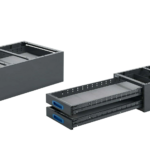
Professional transport setups eliminate this risk by using heavy-duty slide mechanisms paired with integrated mechanical locking systems. High-quality van sliding drawers feature dual-latching components and self-locking designs. Once you push a drawer closed, it mechanically locks into place. The lock physically resists forward and lateral kinetic forces. This guarantees the drawer cannot slide open on the road, even under full loads.
Secure locking mechanisms prevent accidental drawer opening during sharp turns.
Heavy-duty ball-bearing slides absorb road vibration and resist wear.
Secure latching handles keep drawers securely closed under extreme transit stress.
Every storage component in a mobile workshop has a specific, engineered capacity. Overloading drawers causes mechanical lock failure and slide distortion. Bending or warping under excessive weight misaligns the locking mechanisms. This directly compromises their ability to stay closed during transit.
To maintain safe operations and structural integrity, professionals must strictly adhere to verified weight thresholds:
40 kg load capacity for standard drawers, ideal for hand tools, organizing bins, and mid-weight hardware.
Up to 150 kg capacity for heavy-duty sliding drawers, built for heavy machinery, cables, or large equipment.
Exceeding these rated limits leads to metal fatigue, making drawers difficult to operate and prone to opening under braking forces. Proper weight distribution and compliance with verified capacities prevent mechanical failures. This preserves your equipment and maintains predictable vehicle handling.
Storing heavy equipment on high, wall-mounted side shelves destabilizes a commercial vehicle. When a van rounds a sharp curve or encounters sudden highway crosswinds, a high center of gravity amplifies body roll. This makes steering unpredictable and forces electronic stability control systems to work harder to prevent skids.
Positioning heavy tools and hardware beneath a raised floor structure—known as an underfloor layout—aligns the heaviest cargo with the vehicle’s chassis. This low-profile placement keeps the center of gravity close to the road surface. Vehicle stability improves significantly during sudden lane changes or emergency maneuvers.
Lowered center of gravity reduces body roll during high-speed cornering and sudden stops.
Optimized vertical space leaves the upper floor clear for bulk materials and lighter cargo.
This space planning strategy maximizes usable loading volume without compromising road safety. Securing heavy gear in sliding compartments beneath the floor deck establishes an organized, high-capacity utility workspace that remains stable while driving.
When choosing a mobile storage system, the material determines long-term safety and storage integrity. Thin plastic bins and weak cases crack easily in cold weather or under heavy impacts. When a plastic container fails, its contents slide freely across the cargo floor, causing tool breakage and vehicle damage.
Premium plywood construction protects your tools. Robust wooden walls absorb road vibrations and physical impacts, keeping high-value diagnostic equipment and hand tools isolated from shocks. This protection safeguards your investment from transit wear and tear and maintains structural integrity through years of daily, heavy-duty use.
Durable plywood van sliding drawers resist structural deformation. This reliable construction supports business continuity, ensuring your equipment arrives at the job site undamaged and ready for immediate use.
Do not compromise on safety and tool security while driving. Vanshelves.com provides heavy-duty plywood van sliding drawers built for demanding trade environments. Crafted from premium, precision-cut materials, these robust storage solutions keep cargo locked in place, protecting your vehicle, tools, and crew.
Fleet safety and vehicle organization remain essential to successful trade operations. Leaving heavy tools unsecured inside your vehicle exposes your business to physical risks, equipment damage, and financial liabilities. A systematic approach to cargo containment eliminates these operational hazards.
Securing heavy-duty drawers with reliable mechanical locking systems, respecting engineered weight capacities, and optimizing your vehicle’s center of gravity ensures a stable ride. Investing in durable plywood storage preserves your equipment, protects your workforce, and projects a professional, efficient image at every job site.
Unsecured tools carry immense kinetic energy. In a collision at 50 km/h, an object can strike with a force 30 to 40 times its stationary mass. For example, a 10 kg kit can hit with the force of 300–400 kg, potentially shattering bulkheads and causing severe injury or expensive vehicle damage.
Integrated mechanical locks and dual-latching designs ensure that drawers stay closed under lateral forces and sudden stops. This prevents equipment from sliding out, which would otherwise shift the vehicle’s center of gravity and compromise handling or increase rollover risks.
Standard drawers are designed with a 40 kg load capacity for hand tools and hardware. Heavy-duty sliding drawers can support up to 150 kg, making them suitable for heavy machinery and cables. Adhering to these limits prevents metal fatigue and mechanical failure.
By positioning heavy equipment beneath a raised floor, the cargo is aligned with the vehicle’s chassis. This low-profile placement lowers the center of gravity, which reduces body roll during high-speed cornering and improves stability during emergency maneuvers.
Plywood is more durable and absorbs road vibrations better than plastic. While thin plastic containers can crack in cold weather or under impact—allowing tools to slide freely—premium plywood maintains structural integrity and protects high-value tools from transit wear.