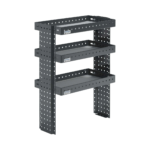
Electric commercial vans represent the future of mobile trade operations. However, transitioning a service fleet to electric vehicles (EVs) requires a fundamental shift in how you manage cargo. Unlike traditional internal combustion engines, an electric drivetrain is highly sensitive to the total weight it carries. Every kilogram loaded into the rear of your vehicle directly impacts the battery depletion rate and total driving distance. To maintain maximum daily productivity and prevent costly midday charging stops, choosing the right van shelving kits is an essential decision. A well-designed modular storage system keeps your workspace organized while directly supporting your fleet’s energy efficiency and overall profitability.
In an electric vehicle, energy consumption is directly tied to the physical laws of rolling resistance and kinetic energy recovery. When you load heavy, unorganized tools and materials into your cargo space, you increase the rolling resistance between your tires and the road surface. The electric motor must draw more current from the battery pack to initiate and maintain forward motion, particularly during stop-and-go city driving.
Furthermore, excess vehicle weight directly reduces the efficiency of regenerative braking. While electric vans are engineered to capture kinetic energy during deceleration and feed it back into the battery, carrying an overloaded or unbalanced payload forces the mechanical friction brakes to engage more frequently to bring the vehicle to a stop. This lost energy cannot be reclaimed, resulting in a shorter operating range.
Fleet operations data demonstrates that carrying unnecessary, unorganized cargo can reduce an electric van’s real-world driving range by a significant margin depending on the driving cycle. For a professional running multiple service calls a day, this loss of mileage translates directly into increased charging frequency, wasted work hours, and decreased daily revenue.
There is a common misconception among commercial vehicle operators that professional steel shelving systems add too much weight to an electric vehicle, prompting some to consider alternative materials like wood or plastic. However, a closer look at material properties reveals that unoptimized wooden shelving is highly inefficient. Wood is porous. It naturally absorbs moisture from the air, which causes your racking system to silently increase in dead weight by several kilograms over time, especially during damp winter months. Moreover, wooden racking is bulky, consuming valuable cargo volume, and tends to wear down quickly under heavy daily use.
Similarly, lightweight plastic alternatives often fail to deliver the structural integrity required for heavy-duty tools. Under the stress of bumpy roads, plastic storage units flex, warp, and wear out quickly, leading to frequent replacements.
Engineered steel shelving provides the ideal middle ground. By utilizing precise manufacturing techniques, a professional steel van shelving system delivers maximum structural integrity with a low self-weight. Steel does not absorb moisture, does not warp under load, and offers a long-lasting workspace foundation that survives the lifetime of the vehicle. By selecting smart, lightweight steel systems, you preserve your battery range goals without sacrificing the rugged durability your trade demands.
Before equipping an electric commercial vehicle, you must accurately calculate your actual payload capacity. The Gross Vehicle Weight Rating (GVWR) is the maximum operating weight of a vehicle as specified by the manufacturer, including the chassis, body, electric battery pack, fluids, accessories, passengers, and cargo.
In electric vans, the GVWR parameters are unique because the massive high-voltage battery pack is exceptionally heavy, often weighing between 300 kg and 700 kg. This heavy battery significantly increases the vehicle’s curb weight, leaving a tighter margin for actual cargo capacity compared to traditional diesel alternatives.
GVWR – Curb Weight – Passenger Weight – Modifications = Remaining Payload Capacity
Follow these steps to determine your usable cargo margin:
By understanding the exact remaining capacity, you can safely select lightweight, high-capacity racking systems that fit within your vehicle’s structural and electric capabilities.
Nordic Workspace Solution
Secure your mobile workspace and protect your EV’s driving range with professional-grade, ready-made van racking kits engineered for durability. Keep your cargo organized and your underfloor high-voltage battery completely safe.
Securing lightweight equipment is only half the battle; how you arrange that equipment inside the cargo area directly dictates your electric van’s energy consumption. When cargo is loaded haphazardly, it destabilizes the vehicle’s center of gravity. This instability forces the electronic stability control systems to intervene frequently, applying micro-braking that continuously drains battery reserves during standard driving.
To optimize efficiency, position your heaviest tools and equipment low down and centered directly over the vehicle’s rear axle. Keeping the center of gravity low prevents body roll in corners, which keeps tire contact even and minimizes unnecessary rolling resistance.
Additionally, a balanced payload ensures that your vehicle achieves maximum traction during deceleration. This structural balance allows the regenerative braking system to operate at peak efficiency, feeding the maximum amount of kinetic energy back into the high-voltage battery rather than wasting it as heat through the mechanical friction brakes.
Selecting the correct material thickness is essential when fitting an electric vehicle. For professional van shelving, 1.5 mm steel has established itself as the precise engineering benchmark. This thickness is utilized strictly in the shelving category to strike an exact balance: it is thin enough to keep the overall racking kit lightweight—protecting your battery range—yet thick enough to prevent structural sagging or buckling under the stress of daily mobile work.
By utilizing 1.5 mm steel shelves instead of bulky wooden alternatives or fragile plastics, you eliminate dead weight without losing cargo capacity. These steel shelf units are built for heavy-duty use, providing a rigid frame that holds your tools securely through years of constant vibrations. If your storage setup includes drawers, these components feature highly reliable weight specifications, with standard drawers built to support 40 kg and specialized long drawers engineered to handle up to 130 kg of load capacity safely on heavy-duty ball-bearing slides.
By investing in professional steel van shelving, you choose hardware engineered in Finland and backed by a comprehensive 10-year warranty. This ensures that your fleet storage remains intact, quiet, and fully functional for a decade, maximizing your return on investment and protecting your mobile workspace.
Safety is a paramount concern when installing interior racking, particularly in modern electric vans. In traditional commercial vehicles, installers routinely anchor shelving units directly into the metal floor panels. In an electric vehicle, however, this practice carries extreme risk. The massive, high-voltage battery compartment is situated directly beneath the cargo floor. A single misplaced self-tapping screw or anchor bolt can puncture the battery casing, causing catastrophic electrical short circuits, thermal runaway risks, or expensive battery damage that voids your vehicle’s factory warranty.
To mitigate this risk, professional anchoring techniques must be used. Specialized mounting rails, side-wall anchoring, and factory-approved mounting points allow you to secure your equipment rigidly without risking contact with sensitive underfloor electronics.
Utilizing pre-engineered, ready-made van shelving kits ensures that your shelving system is securely anchored to the vehicle’s structural frame rather than relying on dangerous floor-drilling methods. These professional kits are designed to handle the daily stresses of commercial transport, providing complete structural safety in the event of sudden braking or collision.
Transitioning to an electric vehicle fleet requires careful consideration of weight and safety. By implementing organized layout strategies, relying on professional 1.5 mm steel shelves, and utilizing safe, vehicle-specific anchoring methods, you can preserve your driving range while maintaining a robust, highly productive mobile workspace. Organizing your tools efficiently ensures your electric van operates at its maximum potential, securing your business profitability for years to come.
Heavy loads increase rolling resistance and require the motor to draw more battery current to maintain motion. Furthermore, excess weight reduces the efficiency of regenerative braking, forcing mechanical brakes to engage and wasting energy that could otherwise be reclaimed by the battery.
Yes. Unlike wood, which is porous and gains dead weight by absorbing moisture, 1.5 mm steel remains lightweight and durable. Steel shelving systems offer better structural integrity, take up less cargo volume, and do not warp or wear down as quickly as wood or plastic alternatives.
To calculate the usable margin, take the Gross Vehicle Weight Rating (GVWR) and subtract the vehicle’s curb weight, the weight of the driver and passengers, and any existing modifications like floor linings or tow bars.
Heavier equipment should be positioned low to the floor and centered directly over the rear axle. This keeps the center of gravity low and prevents instability, which reduces unnecessary battery drain caused by electronic stability control interventions.
The primary difference is the high-voltage battery located under the cargo floor. You must avoid drilling into the floor to prevent battery damage or fire risks. Professional kits use specialized side-wall anchoring and factory-approved mounting points to ensure safety.