A commercial vehicle traveling at highway speeds carries tools, equipment, and a massive amount of kinetic energy. When outfitting a utility van for daily operations, driver and passenger safety depends entirely on how securely the cargo is mounted. Normal driving maneuvers, sudden stops, and emergency turns constantly test the structural integrity of your mobile workshop.
Organizing your vehicle safely protects your business assets, your vehicle, and your team. Failing to secure heavy equipment properly turns a standard utility vehicle into a major hazard. To establish a secure workspace, you need to use the vehicle’s built-in factory mounting points and select hardware designed to withstand constant road vibration and heavy stress.
Many professionals view van organization mainly as a matter of convenience. However, safety is the most important starting point. When a vehicle stops suddenly, unsecured cargo behaves violently. Transport safety data shows that during a sudden stop at 50 km/h, an unsecured object can exert forces equivalent to 40 times its actual weight.
Consequently, a loose 10 kg tool kit instantly behaves like a 400 kg projectile. If your shelving units are poorly secured, a sudden stop can cause the entire structure to tear away from the walls, breaking weak fasteners and sliding forward. Standard cabin partitions are not built to withstand these high-impact forces, posing a direct threat to anyone in the cab.
Beyond the risk of personal injury, loose racking causes significant financial liabilities and operational disruptions:
Commercial vehicle manufacturers design chassis with cargo security in mind. Modern utility vans feature reinforced structural zones built to handle tension and stress. Locating and using these pre-existing factory mounting points is essential for maintaining your vehicle’s safety and long-term value.
Drilling blindly into the vehicle floor or wall ribs is highly risky. It can easily damage hidden wiring looms, brake lines, or the fuel tank. Furthermore, puncturing the galvanized sheet metal breaks the factory anti-corrosion barrier. Moisture then enters, causing rust that eats away at structural components and degrades the vehicle’s resale value.
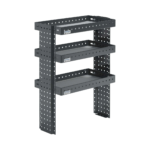
Instead of drilling new holes, anchor your racking directly to the factory tie-down zones and pre-threaded mounting holes. These positions feature heavy-gauge steel reinforcements behind the panels to support heavy payloads safely. Utilizing these factory-engineered zones to secure professional UK van shelving systems guarantees a solid foundation, protects your vehicle’s warranty, and maintains high residual value for your fleet.
Even the strongest factory mounting points are only as reliable as the hardware connecting them to your shelves. A common error in van fitments is using standard wood screws, weak plastic plugs, or lightweight hardware store brackets. These residential-grade components cannot handle the constant physical demands of a mobile workspace.
Road vibration is an underestimated force. Over thousands of kilometers, steady vibration from the engine and road surfaces causes low-grade fasteners to loosen, bend, or shear. To ensure a safe installation, use heavy-duty, commercial-grade fasteners designed for metal-to-metal connections.
Always choose high-tensile steel bolts (Class 8.8 or higher) that offer tested strength under extreme load conditions. Pair these with robust, rigid steel brackets designed to limit flexing. Standard flat brackets bend easily under shifting cargo weights, while reinforced, ribbed steel brackets provide the rigid support needed to absorb deceleration forces. Additionally, always use self-locking Nyloc nuts and spring washers. These locking fasteners resist loosening from vehicle vibration, ensuring your shelving remains permanently secure.
Securing your storage layout requires a systematic approach. Following a precise mechanical workflow ensures your cargo solutions remain quiet, correctly aligned, and structurally sound over years of daily use. A careless installation leads to loose frames and safety hazards, whereas a methodical installation protects both the vehicle chassis and the driver.
To achieve a professional, commercial-grade fitment, proceed through these installation steps in sequence:
Secure Your Workspace
Secure your workspace with crash-tested van shelving designed for factory mounting points. Engineered for durability and backed by a 10-year warranty.
The physical load exerted on your vehicle’s factory mounting points depends on two main factors: the weight of your stored tools and the dead weight of the shelving structure itself. Choosing overly heavy racking materials increases the base weight of your vehicle. This constant weight pulls on the anchoring points before any tools are even loaded.
To solve this engineering challenge, professional cargo systems employ specialized material thicknesses. Using precision-engineered 1.5 mm steel exclusively in the van shelving category ensures high structural rigidity while keeping the overall frame remarkably lightweight. Reducing the structural dead weight of the shelves decreases the stress transferred to the mounting bolts during sudden maneuvers or rough road travel.
This smart weight reduction provides clear practical benefits for the fleet operator:
No matter how securely your van shelving is installed, constant exposure to road vibrations, bumpy terrain, and sudden stop-and-go city traffic will eventually affect mechanical connections. Over thousands of kilometers, minor shifts can occur. A quick, routine check before driving helps maintain a safe workspace.
A simple two-minute safety check stops potential problems early. Walk through your cargo area and physically verify the tightness of your mounting brackets. Make sure there is no visible play or shifting where the metal frame meets the vehicle wall. If any connection point feels loose, tighten the high-tensile fasteners immediately before starting your journey.
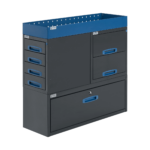
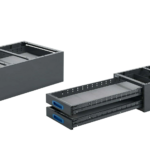
In addition to structural frames, inspect your heavy-duty drawer slides and storage compartments. Standard integrated drawers have a verified 40 kg load capacity, while specialized long drawers support payloads of up to 130 kg. Verify that all safety catches, locking pins, and slide mechanisms operate smoothly and click firmly into their closed positions. This verification prevents heavy tool chests from rolling open during sharp highway turns, keeping cargo contained and the cabin safe.
A small amount of time spent on proper anchoring techniques, factory mounting points, and regular checks keeps your mobile workshop secure and professional. Protecting your tools and vehicle with proper mounting practices keeps your mobile business moving safely and efficiently day after day.
When a vehicle stops suddenly, unsecured cargo behaves violently. At a speed of 50 km/h, an unsecured object exerts forces equal to 40 times its weight. This means a loose 10 kg tool kit instantly becomes a 400 kg projectile, which can tear poorly secured shelving from the walls, break fasteners, and pose a severe threat to anyone in the cabin.
You should always anchor your racking directly to the vehicle’s pre-existing factory tie-down zones and pre-threaded mounting holes. Drilling blindly into the floor or wall ribs is highly risky; it can damage hidden wiring, brake lines, or the fuel tank, and causes structural rust by breaking the factory anti-corrosion barrier.
Avoid standard wood screws and lightweight hardware store brackets. For a commercial-grade installation, use high-tensile steel bolts (Class 8.8 or higher) paired with rigid, ribbed steel brackets. Always secure them with self-locking Nyloc nuts and spring washers, which are specifically designed to resist loosening from constant road vibrations.
Professional cargo systems utilize precision-engineered 1.5 mm steel to keep the structure rigid while significantly reducing dead weight. Lighter frames decrease the leverage forces acting on the mounting anchors during sudden maneuvers, prevent fastener fatigue, and optimize your vehicle’s fuel efficiency without sacrificing heavy-duty payload capacity.
Standard integrated drawers are verified to support a 40 kg load capacity, while specialized long drawers can handle payloads of up to 130 kg. It is important to regularly inspect these drawers to verify that all safety catches, locking pins, and slide mechanisms click firmly closed to prevent them from rolling open during transport.