In business vehicle management, every car on the road generates revenue but also brings responsibilities. While constant attention is paid to driver training, fuel economy, and maintenance, the cargo area is often overlooked. Proper organization of the load space and cargo securing are not just about maintaining order, as they directly impact company risks. In the event of a potential collision, the structure and fastenings of the load space determine driver safety, protect the property being transported, and influence the approval of insurance claims.
The installation of cargo area furniture, certified safety standards, and insurance company compensation requirements are closely linked. When fleet managers understand the impact of professional storage solutions on risk management, they can improve employee safety, protect valuable tools, and avoid the denial of insurance claims.
In a collision situation, insurance company inspectors review the damages thoroughly. After an accident, the primary task of the insurance company is to determine the exact cause of the damage and ensure that the insurance terms have been followed. Business vehicle insurance is based on the assumption that cargo is transported safely and in accordance with regulations. Poorly secured furniture and loose cargo create a significant risk that can lead to the termination of insurance coverage.
Many business vehicle insurance policies exclude damages caused by negligent loading or the use of uncertified shelving from the scope of compensation. If the inspection reveals that loose tools or an unapproved shelf structure failed and thus worsened the damage, the insurance company has the right to deny the compensation claim. As a result, the company itself must be responsible for vehicle damage, medical expenses, and potential third-party property damage, which can cause significant direct costs.
The physics of a collision explain the strict terms of insurance companies. According to European road safety studies, in sudden braking or a collision, loose objects are thrown with immense force. In a sudden deceleration, a heavy tool can even penetrate the cabin bulkhead. Even a conventional sudden stop can cause serious injuries to the driver, break the vehicle’s windows, and interrupt the company’s operations for a long time. If equipment is allowed to be loose in the cargo area, the insurance company considers that the company has neglected its duty of care.
When an occupational accident occurs in connection with a traffic accident, the employer’s liability is assessed in accordance with occupational safety laws. If the supervisory authority or a court considers that the employer did not do enough to protect their employees, the consequence can be substantial fines and claims for damages. To reduce statutory and financial risks, a company must be able to demonstrate that it has taken care of occupational safety in all situations.
Independently crash-tested van racking serves as strong evidence of this duty of care obligation. In accident investigations, certified equipment proves that the company consciously chose systems designed to withstand powerful impacts. Such documentation protects the company from legal liabilities and proves that occupational safety was not compromised in the wrong place.
The official and legal weight of crash tests is based on known standards, such as the ECE R17 regulation. This standard tests the durability of vehicle seats and cargo securing systems at exceptionally high decelerations. Racking certified according to these norms remains reliably attached to the vehicle body even in the event of a collision. The furniture does not collapse forward, but instead keeps even heavy items on the cargo area side, which protects the drivers and passengers sitting in the cabin.
The safety of a mobile workstation depends entirely on how firmly the furniture is anchored to the car. In the hope of cost savings, shelves are sometimes installed by oneself or generic brackets are used. These homemade solutions create structural weaknesses that fail easily under load. Homemade wooden shelves or poorly anchored metal racks tear loose in sudden evasive maneuvers significantly more easily than certified, professionally installed systems.
New vans are designed at the factory to have certain approved mounting points. Professional installers strictly follow the manufacturer’s instructions to ensure that the strength of the vehicle chassis is maintained. Drilling holes in unauthorized places in the body or floor can damage wiring, puncture fuel lines, or weaken the crumple zones that are important in a collision. When racking is attached to the correct load-bearing points, the entire shelf structure acts as an extension of the vehicle’s frame, which distributes forces evenly and prevents the shelves from coming loose even in rapid deceleration.
Alongside mechanical risks, self-installation involves major financial risks. Most car manufacturers deny the structural warranty of the chassis immediately if unauthorized drilling or changes are found in the car. Insurance companies also require that modifications made to the vehicle follow official safety regulations. Homemade installations that deviate from standards can void insurance coverage, in which case the company is responsible for all damages and costs itself if the fastening fails on the road.
Manufacturer-approved fastenings: Ensure that the furniture is attached to certified load-bearing structures.
Warranty protection: Prevents unauthorized drilling of the chassis and the voiding of the vehicle warranty.
Fulfillment of insurance terms: Meets the strict requirements of insurance companies for vehicle modifications.
When choosing equipment for a business vehicle, certified safety and mechanical quality must be carefully evaluated. When high-quality van furniture is being purchased, instead of just dimensions and prices, it is worth looking at official safety ratings. Standards distinguish safe systems from cheap and untested options that do not offer sufficient protection in extreme situations.
One of the most important safety factors is the locking mechanism of the drawers. While driving, the car is exposed to constant vibration, curves, and strong braking. Without proper locking, drawers can slide open, which shifts the car’s center of gravity and takes the driver’s attention away from the road. In certified racking, automatic double locks or strong latches are used, which keep the drawers firmly in place until they are opened by hand. The design prevents items from falling and improves driving safety.
In addition to drawer locking, approved storage systems are recognized by tested load limits and high-quality materials. When planning equipment purchases, it is worth paying attention to the following structural points to ensure safety:
Double-locking latches: Prevent drawers from opening accidentally while driving.
Vibration-tested fasteners: Self-locking screws and nuts that do not loosen from road unevenness.
Certified load limits: Proven and mechanically tested load limits for each part.
The arrangement of items in a van directly affects the car’s driving behavior. Incorrect placement of heavy tools and supplies raises the car’s center of gravity, which increases tilting and weakens grip in emergency braking or sudden evasive maneuvers. To maintain driving stability and reduce accident risks, the heaviest equipment and items must be placed as low as possible, close to the floor and wheel arches.
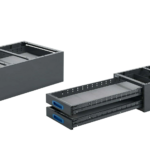
High-quality furniture systems have precise load limits that correspond to demanding professional use. Following these recommendations prevents fatigue fractures and structural failure. Standard ball-bearing drawers are designed to withstand a **40 kg load**. Long special drawers and heavy floor structures carry a weight of up to **130 kg**. These verified capacities guarantee that heavy items stay in place even in sharp curves and braking.
In addition to durable racking solutions, proper tie-down points should be used to secure the load. Placing heavy tools low helps maintain the vehicle’s original driving characteristics. This significantly reduces the risk of rollover and protects the company from possible negligence accusations in safety inspections.
Protecting a company from liability issues requires long-lasting and durable safety equipment. Cheap and light racking often starts to bend, its rails warp, and welds fail after a few years of hard daily use. If the structure of the system weakens, it no longer offers the same protection in a collision, exposing the company to financial and legal risks.
Racking designed in Finland for demanding conditions is made of strong **1.5 mm steel**. This material thickness ensures that the rack frame withstands daily stress, heavy loads, and varying weather conditions without losing its strength. Thanks to the long service life and sturdy structure, fastenings and locks work reliably year after year, preventing mechanical failures and improving occupational safety.
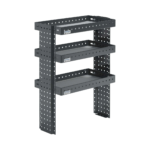
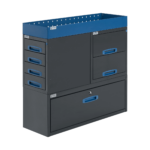
Vanshelves.com offers Finnish-designed van furniture made of strong **1.5 mm steel**. Our racking comes with a class-leading **10-year warranty**, and it is designed to keep your cargo safely in its place year after year. Explore our crash-tested and insurance-compliant options today, and ensure the safety of your company’s vehicles.
A 10-year warranty guarantees long-term protection and peace of mind
High-quality 1.5 mm steel components
Risk management for business vehicles is continuous work. By investing in certified, crash-tested furniture and taking care of the correct weight distribution of the load, you protect your employees, secure the company’s property, and ensure that insurances remain valid. When you remove loose objects from the cargo area, you ensure that your employees can focus on safe and professional work on every journey.
Insurance policies often exclude damages caused by negligent loading or the use of uncertified shelving. If an inspection reveals that loose tools or an unapproved shelf structure failed and worsened the damage, the insurance company can deny the claim, leaving you responsible for all resulting costs.
Independently crash-tested racking, such as systems meeting the ECE R17 standard, serves as strong evidence that an employer has fulfilled their duty of care. This documentation protects the company from substantial fines and legal claims by proving employee safety was prioritized in the event of an accident.
No, self-installation or homemade solutions create structural weaknesses that can fail under load. Furthermore, drilling holes in unauthorized places can void the vehicle’s structural warranty and your insurance coverage. Professional installation ensures the system is correctly anchored to manufacturer-approved mounting points.
You should look for official safety ratings and certified load limits. Essential safety features include vibration-tested fasteners and automatic double-locking mechanisms or strong latches to prevent drawers from sliding open while driving.
To maintain driving stability and lower the vehicle’s center of gravity, the heaviest equipment should be placed as low as possible, close to the floor and wheel arches. Always ensure these items are stored within the verified weight capacities of your system, such as heavy floor structures designed for up to 130 kg.
Designed in Finland for demanding professional use, these racking systems are made of strong 1.5 mm steel. This material thickness ensures the frame withstands daily stress, heavy loads, and varying weather without losing its structural strength, all backed by a 10-year warranty.