A commercial van represents the core of a trade professional’s daily operation. For those operating a Mercedes-Benz Sprinter, the vehicle serves as a mobile warehouse, workshop, and office combined. However, loading a large-volume van without a strategic plan introduces significant business risks. Overloading and poor weight distribution directly affect vehicle handling, accelerate component wear, and increase fuel costs. Safely managing tool weight requires a clear understanding of vehicle payload limits and the integration of highly structured racking systems.
To run an efficient, safe mobile workspace, you must treat your vehicle’s cargo area as an engineered storage environment. Implementing professional Sprinter shelves is not simply about keeping tools off the floor; it is a critical step in managing the physical dynamics of a heavy-duty commercial vehicle. Understanding the mechanics of payload distribution ensures that your vehicle remains safe to operate, legally compliant, and highly productive throughout its service life.
Every commercial vehicle operates under a strict Gross Vehicle Weight Rating (GVWR), which is the maximum operating weight specified by the manufacturer, including the chassis, body, fluids, passengers, and cargo. The payload capacity is the precise difference between the vehicle’s curb weight and its GVWR. Exceeding this limit or placing heavy weight in the wrong zones creates severe operational hazards.
According to vehicle safety studies conducted by European transport authorities, unbalanced cargo significantly increases stopping distances and compromises stability during sudden lane changes. When heavy machinery, generators, or material stock are piled loosely on one side of the cargo area, the vehicle’s center of gravity shifts. This imbalance causes uneven wear on suspension dampers, brakes, and tires, leading to costly maintenance interventions.
To prevent these issues, weight must be distributed both vertically and horizontally. Heavy assets must reside low and close to the axle lines, while lighter consumables and hand tools occupy the upper tiers. Using robust, model-specific shelving systems allows professionals to compartmentalize these loads, ensuring the vehicle’s center of gravity remains as low and centered as possible.
Organizing a high-roof, long-wheelbase cargo van requires a system that matches the physical dimensions of the vehicle. For professionals looking to optimize their mobile layout, choosing specialized van configurations is essential. You can explore vehicle-specific configurations at Vanshelves Search by Car to find layouts tailored directly to your van’s exact measurements.
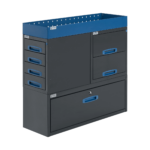
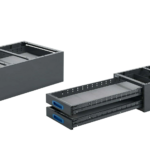
When planning a professional racking layout, each storage module must be assigned a clear cargo role based on its load limitations. High-performance mobile setups rely on structured storage systems that keep heavy items secure. For instance, heavy power tools and hardware should be housed in sliding drawer units. Standard heavy-duty drawer units support a verified 40 kg load capacity per drawer, while specialized long drawer units can manage up to 130 kg of weight. Utilizing these exact limits prevents structural damage and ensures the longevity of your equipment.
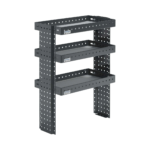
For bulkier, less dense items, modular shelving units provide the perfect solution. Highly stable racking designs, such as those available in the Vanshelves UK Van Shelving portfolio, are built for heavy-duty use. These systems utilize highly durable structural frame designs to carry significant loads across multiple levels without bowing or rattling. By allocating lighter parts, organizers, and consumable boxes to the higher shelves, and keeping heavy toolboxes and machinery in low-slung, high-capacity drawers, you maintain optimal balance.
This strategic separation not only improves road safety but also directly impacts business efficiency. Instead of wasting time searching through an unorganized pile of equipment, your technicians can instantly access every tool. The resulting reduction in search times directly translates to higher billing efficiency and a more professional presentation when arriving on site.
Securing heavy tools requires more than placing them on a flat surface. The structural integrity of the racking system determines how the vehicle responds under heavy braking or sudden evasive maneuvers. Sprinter shelves must be anchored directly to the vehicle chassis and the internal structural ribs rather than thin plywood lining or weak sheet metal panels. Proper anchoring ensures that lateral forces are absorbed by the vehicle’s frame, preventing the storage units from tearing loose.
The framework of high-quality van shelving systems is manufactured using 1.5 mm steel. This specific material thickness provides the necessary rigidity to support heavy work equipment without adding excessive dead weight to the vehicle chassis. For the operator, this design choice means that shelves will not twist, bend, or crack when driving over uneven construction sites or unpaved roads, ensuring your tools remain exactly where they belong.
The generous cargo dimensions of a high-roof Mercedes-Benz Sprinter can easily mislead operators into carrying too much material. While the physical space permits loading bulky machinery, the vehicle’s payload limit remains absolute. Exceeding legal weight ratings is a serious regulatory offense and can lead to immediate fines during commercial roadside inspections. Organizing the van with professional shelving helps you visually audit your inventory, ensuring you carry only the essential equipment required for the workday.
By dividing the cargo volume into defined storage zones, technicians can separate everyday tools from seasonal hardware. This systematic division of weight prevents the slow accumulation of unnecessary items that drain fuel efficiency. Maintaining an organized layout means your vehicle operates well within its safety limits, reducing wear on suspension bushes, steering components, and brake rotors.
A structured mobile workspace serves as a direct extension of your professional standards. When customers see an organized interior, it builds immediate trust in your operational quality. Proper weight management protects your staff, secures your tools, and lowers fleet running costs over the lifetime of the vehicle.
Transform your commercial vehicle with an engineered shelving system that matches your workflow. Keep your heavy-duty tools secure and protect your vehicle’s payload limits with modular systems built for professional trades.
Engineered with 1.5 mm steel profiles for structural durability
Drawers rated for 40 kg load capacity (Long drawers up to 130 kg)
Shelving designs built for continuous heavy-duty use