
Every professional driver knows that a loaded van handles differently than an empty one. This is not just a matter of “feeling heavy”; it is a matter of physics. When you add weight to the cargo area, you change the vehicle’s momentum and its response to steering inputs. In the context of van shelving safety, understanding how payload alters handling is the first step toward a safer mobile workspace.
When a van enters a turn, centripetal force acts upon the mass of the cargo. If that weight is loose or poorly distributed, the vehicle may understeer (refusing to turn) or oversteer (spinning out). By utilizing a high-quality van shelving system, you ensure that tools and materials are fixed in place, preventing the shifting of mass that often leads to loss of control. For a deeper look at selecting the right setup, refer to our complete buyer’s guide to storage systems.
Furthermore, the added weight increases the vehicle’s kinetic energy. This means that every maneuver—be it a lane change or an emergency stop—requires more effort from the suspension and braking systems. A professional racking solution doesn’t just hold your tools; it manages that kinetic energy by keeping the weight exactly where the vehicle manufacturer intended it to be.
The center of gravity (CoG) is the point at which the weight of the vehicle is perfectly balanced. In a standard cargo van, the CoG is relatively low. However, as you install shelves and load them with heavy components like motors, compressors, or bulk fasteners, the CoG rises. A high CoG is a primary contributor to roll-over accidents, especially during sudden evasive maneuvers or high-wind conditions.
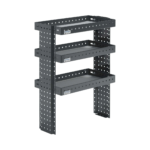
To maximize van shelving safety, heavy items must always be stored on the lowest possible levels. The upper shelves should be reserved for lightweight items such as plastic fittings, insulation, or paperwork. Our shelving units are designed to facilitate this hierarchy of weight. By keeping the bulk of your payload close to the floor, you maintain a lower CoG, which significantly improves the vehicle’s stability and reduces the leverage force acting on the suspension during cornering.
A professional layout ensures that your van remains planted on the road. When weight is kept low, the “pendulum effect” is minimized, allowing the driver to maintain better control when navigating roundabouts or winding rural roads. This is not just about convenience; it is a fundamental safety requirement for any commercial fleet.
It is a common mistake to load all heavy equipment on one side of the van or directly over the rear axle. Improper distribution creates an imbalance that places undue stress on specific vehicle components. For example, loading too much weight behind the rear axle can create a “seesaw” effect, lifting the front of the van and reducing the grip of the steering tires. This makes the steering feel “light” and unresponsive.
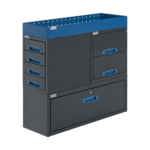
Conversely, overloading one side of the vehicle leads to uneven suspension compression. This causes the van to lean, which affects the wheel alignment and makes the vehicle pull to one side. To ensure van shelving safety, the total payload should be distributed evenly between the left and right sides of the cargo area. Achieving this balance often requires a modular van shelving configuration that allows for customized placement of heavy drawer units and shelf levels.
By balancing the load across both the front and rear axles, and side-to-side, you ensure that the tires maintain a consistent contact patch with the road. This balance is critical for maintaining traction in wet or icy conditions, where even a slight imbalance can lead to a dangerous skid.
Stopping a fully loaded van requires significantly more force than stopping an empty one. However, if the payload is imbalanced, the braking system cannot function at peak efficiency. Modern Anti-lock Braking Systems (ABS) and Electronic Stability Control (ESC) rely on consistent data from all four wheels. If one side of the van is significantly heavier, the brakes on that side must work harder, leading to overheating and “brake fade.”
Uneven weight distribution also has a direct impact on your bottom line through accelerated tire wear. When one corner of the vehicle carries a disproportionate share of the load, that tire will wear out much faster than the others. Overloaded tires are also prone to blowouts because the sidewalls generate excessive heat. Integrating a professional van shelving system allows you to organize your gear so that the weight is spread across the entire chassis, protecting your tires and ensuring your brakes can stop the vehicle safely every time.
Consistent maintenance and smart loading aren’t just about safety; they are about reducing the total cost of ownership for your vehicle. A balanced van is a more efficient van, requiring fewer visits to the workshop for premature brake or tire replacements.
The materials used in your van’s interior are just as important as the layout. In the van shelving category, we prioritize the use of 1.5 mm steel for our structural components. This specific thickness provides the ideal balance between strength and weight. Cheap, flimsy shelving can buckle under the stresses of daily driving, especially when carrying heavy loads or subjected to the vibrations of the road.
Structural integrity is a core component of van shelving safety. Our 1.5 mm steel shelving is engineered to withstand the G-forces generated during heavy braking and sharp turns. Unlike lighter materials that might flex or rattle, these steel units remain rigid, ensuring that the shelves do not collapse or dump their contents during a journey. This rigidity also helps to dampen noise in the cabin, allowing the driver to stay focused on the road rather than distracted by clattering tools.
Furthermore, steel is inherently durable. It does not degrade like wood or thin aluminum might over years of heavy-duty use. When you invest in 1.5 mm steel shelving, you are investing in a system that maintains its safety profile for the long haul, protecting both your equipment and your driver throughout the life of the vehicle.
In the event of a collision or sudden stop, any unsecured item in the back of a van becomes a dangerous projectile. A heavy wrench or a box of parts moving at 50 km/h can strike the bulkhead or the driver with lethal force. The primary purpose of a professional van shelving system is to contain these items and prevent them from becoming hazards.
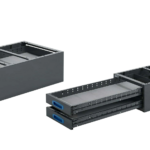
Our systems include integrated features like drawer units with a 40 kg load capacity (and up to 130 kg for long drawers) that feature secure latching mechanisms. This ensures that even under heavy deceleration, your tools remain exactly where you put them. Beyond drawers, the use of dividers and non-slip mats within the shelving units helps to keep smaller parts organized and stationary.
A professional image starts with an organized van, but professional safety starts with a secured load. By eliminating loose clutter, you remove the risk of injury and the risk of damaged equipment. Every tool should have a dedicated home, and every home should be engineered to hold that tool firmly in place regardless of road conditions.
For business owners and fleet managers, van shelving safety is more than a technical concern—it is a matter of compliance and liability. In many jurisdictions, employers have a legal “duty of care” to provide their employees with safe equipment. Operating a van that is overloaded or has improperly secured cargo can lead to significant fines, voided insurance claims, and legal action if an accident occurs.
Investing in a professional racking solution demonstrates a commitment to workplace safety. It provides peace of mind that the vehicle is operating within its design limits and that the driver is protected by high-quality, engineered equipment. From an insurance perspective, a well-organized and secured van is often seen as a lower risk, which can be a factor in long-term premium stability.
Ultimately, the science of payload management is about protecting your most valuable assets: your people and your reputation. A van that is loaded correctly, using durable 1.5 mm steel shelving, is a vehicle that helps your business stay on the move, safely and profitably. Stop searching for tools in a chaotic cargo area and start working with a system designed for efficiency and engineered for safety.